It doesn't replace a licensed or complete sheet for the full song, and this guide won't reproduce that copyrighted arrangement. Use the method below on whichever appropriate sheet you're working from.
How the coordination actually breaks down
The opening texture is two things happening at once: a short, repeated chord figure on top, and a separate, slower bass movement underneath. Most of the difficulty isn't either part on its own. It's keeping them independent once you put your hands together.
Start by tapping the upper rhythm on a single key until every attack lands evenly. Then set that aside and practice the bass movement alone, the same way. Choose one comfortable fingering for the short phrase you’re working on and keep it unchanged across every repetition. Changing fingers between reps makes a coordination problem harder to diagnose: when a phrase falls apart, you want to know it is a timing issue, not a different-finger-every-time issue.
A placeholder pattern to practice the shape on
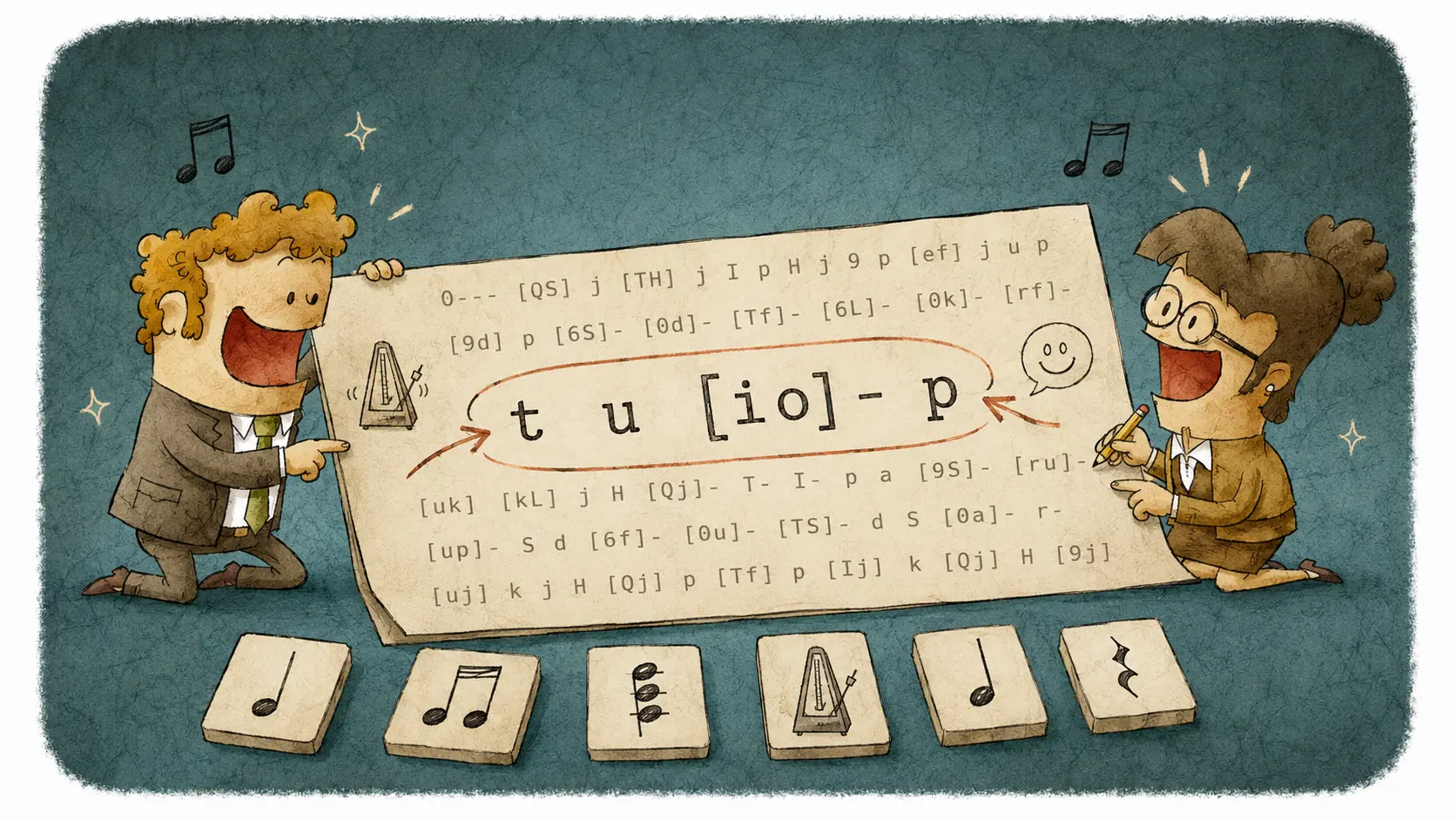
Still D.R.E. is a licensed song, so this guide won't print its actual notes. You can drill the same coordination problem on a neutral placeholder first: repeat `[io]` on the beat with your right hand while your left hand plays `t` on every other beat. That's the same shape as the real part, a short repeated figure on top against a slower, separate movement underneath. Once tapping and switching between the two feels automatic on this placeholder, the same isolation steps carry straight over to your actual sheet.
The tempo ladder
Once both hands feel calm on their own, combine one short phrase at a tempo slow enough that you can hear exactly which hand caused a mistake, if one does. From there, climb in small steps instead of jumping to full speed: play the phrase three clean times, raise the tempo by one small increment, then repeat.
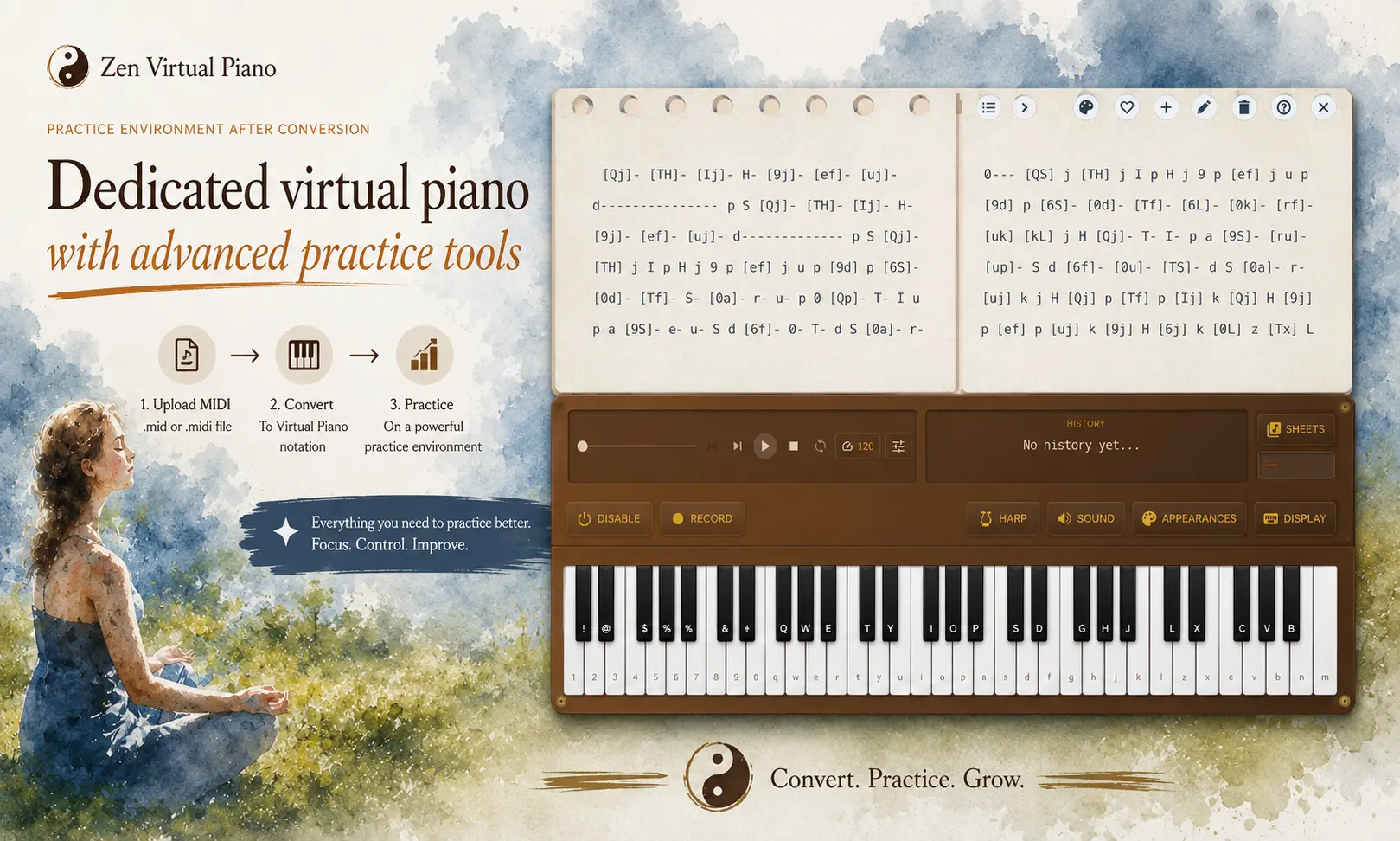
In Zen Virtual Piano, select only that phrase, enable Loop, and choose a metronome value within the current 40–160 BPM control range. Start where the two parts stay separate and even. The selected loop keeps the input fixed while one BPM change gives you a clear comparison on the next repetition.
When coordination breaks
You'll usually hear it before you can explain it: one hand starts chasing the other, or the bass note lands a hair before or after the chord instead of locking in with it.
When that happens, stop and go back to separate-hand practice rather than pushing through. Repeating a rushed version teaches the rush. It's tempting to keep playing through the mistake hoping it smooths itself out, but that just makes the shaky timing the thing you're practicing.
Optional 15-minute planning routine
| Time | Do this |
|---|---|
| 0:00–2:00 | Tap the upper rhythm alone on one key, listening for even spacing |
| 2:00–5:00 | Practice the bass movement alone, without speeding up the last note |
| 5:00–10:00 | Combine one short phrase at a slow tempo, same fingering every time |
| 10:00–14:00 | Climb the tempo ladder: three clean reps, one step up, repeat |
| 14:00–15:00 | One relaxed attempt at the full section, start to finish, no stopping |
Practice now
Use this routine with a Still D.R.E. arrangement you have permission to use, and select one difficult passage rather than the whole piece. The phrase-reading guide can help when decoding is the bottleneck. The Library provides the contextual sheet path, while the primary action opens Zen Virtual Piano for the bounded loop and tempo ladder.
Practice now destinations